Understanding the Role of Art in Contemporary Interiors
Contemporary interiors are built around balance. Clean furniture, open space, natural light, neutral palettes, and carefully selected decor all work together to create a room that feels modern and intentional. In this kind of environment, wall art becomes more than decoration. It defines the mood, adds personality, and often becomes the strongest visual point in the space.
Two of the most popular directions for modern homes are abstract art and structured designs. Abstract art brings emotion, movement, and freedom. Structured designs bring order, symmetry, and architectural clarity. Both can create maximum impact, but they communicate very different energies.
Choosing between them depends on the atmosphere you want to create. A room can feel soft and expressive with abstract pieces, or clean and controlled with geometric and structured artwork. The best choice is not always about what looks beautiful on its own, but what works with the space around it.
What Makes Abstract Art So Powerful?
Abstract art is powerful because it does not need to represent something obvious. Instead of showing a clear object, landscape, or figure, it uses color, texture, shape, and movement to create emotion. This makes it one of the most flexible choices for contemporary interiors.
A large abstract piece can make a neutral living room feel warmer, a bedroom feel calmer, or an office feel more creative. It invites interpretation. One person might see energy and movement, while another sees peace and softness. That open feeling is part of its strength.
For homeowners who want a strong focal point without choosing literal imagery, modern abstract art is one of the most effective options. It gives the room personality while keeping the design sophisticated and open-ended.
See also: Digital Communication Technology Explained
The Beauty of Structured Designs
Structured designs are built on order. They often include geometric shapes, lines, grids, arches, symmetry, repeated patterns, or architectural compositions. Unlike abstract art, which can feel spontaneous and emotional, structured artwork feels precise, balanced, and controlled.
This makes structured designs ideal for contemporary homes that already use clean lines and minimal furniture. A geometric print above a sofa can echo the shape of a coffee table, rug, or window frame. A structured composition in a hallway can make the space feel organized and polished.
Structured designs are especially useful when a room needs clarity. If the furniture, textures, or colors already feel busy, structured art can calm the space. It creates visual discipline and helps the room feel more refined.
Abstract Art Creates Emotion
The main strength of abstract art is emotional impact. It can bring warmth, drama, softness, energy, or mystery into a room. A bold abstract piece with deep reds, blues, or black tones can make a living room feel dramatic. A soft abstract artwork with beige, cream, and pale pink can make a bedroom feel peaceful.
Abstract art is also excellent for adding movement. Brushstrokes, layered colors, and organic shapes can make a room feel alive. This is especially valuable in minimalist interiors, where too many straight lines can feel cold or static.
If your space feels too plain, abstract art can introduce visual energy without adding clutter. One large piece can transform the entire room.
Structured Designs Create Balance
Structured artwork creates a different kind of impact. It brings stability. In contemporary spaces, this can be extremely valuable. Modern homes often include open layouts, large walls, and minimal furniture. Structured designs help organize that openness.
A geometric artwork can make a dining room feel sharper. A line-based piece can make a home office feel focused. A symmetrical design can bring calm to a bedroom. Structured art works especially well when the goal is to create a polished, architectural mood.
This style also pairs beautifully with modern materials such as marble, concrete, glass, metal, leather, and dark wood. It reinforces the clean, designed feeling of the room.
Which Style Works Best in a Living Room?
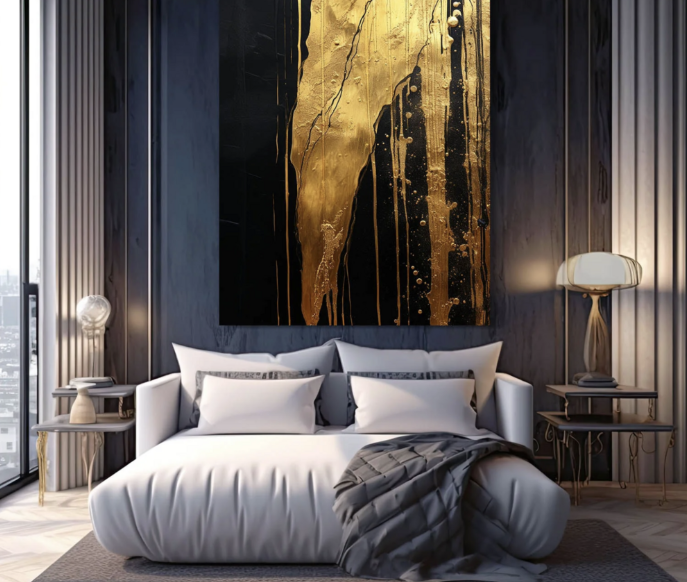
In a living room, the choice depends on the role of the artwork. If you want the art to become the emotional center of the room, abstract art is usually the stronger choice. A large abstract piece above the sofa can add color, depth, and personality instantly.
If you want the room to feel sleek, calm, and highly organized, structured design may be better. Geometric artwork can make the space feel modern without becoming too expressive.
For many living rooms, the best solution is to combine both ideas. Choose abstract art with some structure, such as bold shapes, controlled color blocks, or balanced composition. This gives you emotion and order at the same time.
Which Style Works Best in Bedrooms?
Bedrooms usually need a calmer atmosphere, so the artwork should support rest and comfort. Soft abstract art works beautifully here because it adds emotion without feeling rigid. Gentle colors, flowing shapes, and subtle textures can make the space feel warm and peaceful.
Structured designs can also work in bedrooms, especially if the room is very minimalist. A simple line drawing, geometric print, or balanced monochrome design can create calm and order.
The key is to avoid anything too visually aggressive above the bed. Whether abstract or structured, the artwork should feel intentional, balanced, and easy to live with.
How to Match Art With Furniture
Furniture plays a major role in choosing between abstract and structured art. If your furniture is very minimal, abstract art can add personality and softness. A simple white sofa, clean wooden table, and neutral rug can come alive with a colorful abstract artwork.
If your furniture is already expressive, with curved shapes, bold colors, or rich textures, structured art may create better balance. It prevents the room from feeling too chaotic.
A good rule is to create contrast. Pair soft furniture with sharper art, or structured furniture with more expressive artwork. This creates a layered, designer-level interior.
Scale Matters More Than Style
Whether you choose abstract art or structured design, size is essential. A small artwork on a large wall can feel weak, no matter how beautiful it is. Contemporary interiors often need larger pieces because the spaces are open and the walls are clean.
Large-scale art creates confidence. It makes the room feel finished and intentional. A single oversized artwork can often have more impact than several small prints.
For homeowners looking to elevate a modern space, MusaArtGallery® offers wall art that can help create a stronger focal point and a more curated interior.
Final Thoughts
Abstract art and structured designs both have a place in contemporary spaces. Abstract art brings emotion, movement, and personality. Structured designs bring order, balance, and modern clarity. One is more expressive, while the other is more controlled.
The best choice depends on the feeling you want in the room. Choose abstract art when your space needs warmth, energy, or creativity. Choose structured designs when your room needs focus, symmetry, or calm sophistication.
In the strongest interiors, art is not chosen randomly. It supports the architecture, furniture, color palette, and mood of the home. Whether abstract or structured, the right piece can turn a simple wall into a powerful design statement.